On 21-23 October, Moscow is hosting the international scientific and practical conference "Scientific and Humanitarian Cooperation as a Reliable Foundation for the Eurasian Security Architecture." The event is organized by the CIS Anti-Terrorism Center and Moscow State Linguistic University (MSLU).
The conference aims to provide a forum for exchanging knowledge and best practices in scientific and humanitarian cooperation to strengthen Eurasian security.
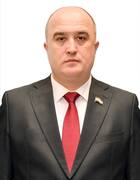
Sergei Pospelov, Executive Secretary of the CSTO Parliamentary Assembly, addressed the plenary session.
In his speech, he gave a detailed overview of the Assembly's 20 years of work on developing legal mechanisms to counter international terrorism and transnational threats.
Sergei Pospelov underlined that continuous parliamentary monitoring of the military and political situation in the region allows the CSTO PA to promptly update the legislative framework of CSTO member states and respond to geopolitical challenges, including technological terrorism and cyberterrorism.
The Executive Secretary pointed out that in 20 years the Assembly has developed 104 model acts, with about 45 of them directly or indirectly addressing security.
In 2026-2030, the CSTO PA is to draft new documents in this area, including the model law "On Biological Security" and model acts on protecting critical infrastructure and cyberspace, he said.
"The Assembly's model legislation is rightly recognized as one of the effective tools for providing a legal framework for joint measures to prevent, suppress and respond to potential aggression, hybrid challenges and threats," Sergei Pospelov stressed.
In conclusion, he said the Assembly is open to expanding its dialogue with the scientific and expert community.
 RU