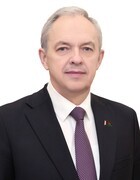
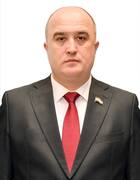
Following the meeting of the Standing Commission of the CSTO Parliamentary Assembly on defence and security issues, its Chairman, Anatoly Vyborny, outlined the current areas of development of the CSTO’s legal framework and the work being carried out within this framework.
According to him, the focus is on working on drafts of a number of model legislative acts devoted to cybersecurity and the management of artificial intelligence in the defence and security sphere, including the harmonisation and unification of legal mechanisms in these areas in order to fulfil the CSTO’s statutory tasks. “With this, we are laying the foundation for future model regulatory acts and technical standards. And this is not the final point, but the start of a major effort, taking into account new challenges and threats,” Anatoly Vyborny noted. He said that after the model recommendations of the CSTO are incorporated into national legislation, additional tools will become available to create a unified conceptual framework — to enable countries to interact using a single legal language.
Anatoly Vyborny stated that experts and parliamentarians are working on mechanisms to determine the secrecy status of data when it is processed by artificial intelligence — so that it is clear how to handle sensitive data without compromising the national security of the member states of the Organization. “This is important because the compatibility of legal systems determines how quickly and consistently the CSTO member states will be able to respond to new threats,” the parliamentarian explained.
 RU