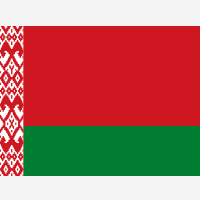
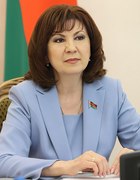
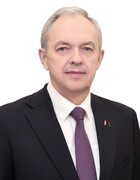
Delegation of the National Assembly of the Republic of Belarus to the CSTO PA consists of 7 deputies from the House of Representatives of the National Assembly of the Republic of Belarus and 4 deputies from the Council of the Republic of the National Assembly of the Republic of Belarus.
Plenipotentiary representative of the National Assembly of the Republic of Belarus: Viktor Kogut
Website of the House of Representatives of the National Assembly of the Republic of Belarus: http://house.gov.by/en/
Website of the Council of the Republic of the National Assembly of the Republic of Belarus: http://www.sovrep.gov.by/ru/
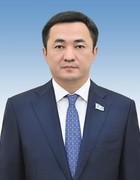
The delegation of the Kurultai of the Republic of Kazakhstan to the CSTO PA is represented by 6 deputies.
The head of the delegation is Aybek Dadebai, Chairman of the Kurultai of the Republic of Kazakhstan.
Deputation:
ADAMBEK Kendebai
KUSPEKOV Olzhas
RAKHIMZHANOV Askhat
KEMALOV Meirambai
KOZHAEV Marat
KUCHINSKAYA Yulia
Plenipotentiary Representative of the Parliament of the Republic of Kazakhstan, deputy Executive Secretary of the CSTO Parliamentary Assembly: Viktor Rogalev
Website of the Kurultai of the Republic of Kazakhstan: https://quryltai.kz/
Delegation of the Supreme Council of the Kyrgyz Republic to the CSTO PA consists of 6 deputies.
AKIMBAYEVA Gulnara
ALIMZHANOVA Nilufar
JALILOV Azamzhan
KOZUYEV Alisher
UZAKBAEV Ulukbek
Plenipotentiary Representative of the Supreme Council of the Kyrgyz Republic: Nurbek Satvaldiev
Website of the Supreme Council of the Kyrgyz Republic: http://www.kenesh.kg/
Delegation of the Federal Assembly of the Russian Federation to the CSTO PA is represented by 10 deputies of the State Duma of the Russian Federation and 12 senators of the Russian Federation.
Plenipotentiary representative of the Federal Assembly of the Russian Federation - deputy Executive Secretary of the CSTO Parliamentary Assembly: Mikhail Krotov
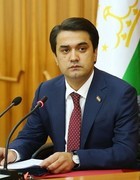
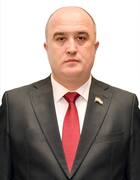
Delegation of the Supreme Assembly of the Republic of Tajikistan to the CSTO PA consists of 6 deputies of the National Assembly of the Supreme Assembly of the Republic of Tajikistan and 6 deputies of the Assembly of Representatives of the Supreme Assembly of the Republic of Tajikistan.
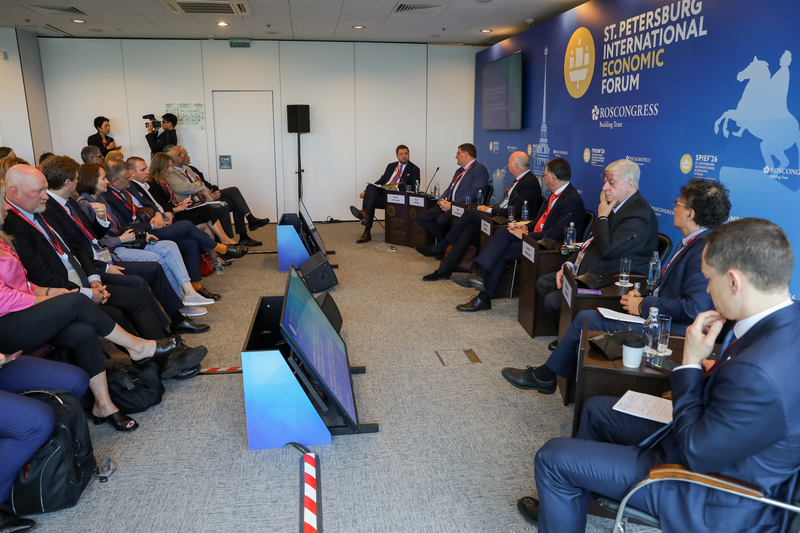
The 29th St. Petersburg International Economic Forum has finished in Saint Petersburg. SPIEF-2026 welcomed delegations from over 100 states and held more than 150 sessions.
During the panel session titled “'The World Disorder'. Is There Any Room for Diplomacy in Contemporary International Relations?," participants discussed an unprecedented decline in trust in the global arena.
Parliamentarians from CSTO Member States, as well as the Secretariat of the Organization’s Parliamentary Assembly, took an active part in discussions on the transition from a unipolar world to a polycentric world order.
The agenda, moderated by Dmitry Stolkov, associate professor at MGIMO University of the Russian Ministry of Foreign Affairs, was dominated by a fundamental dilemma: is modern diplomacy capable of resolving growing geopolitical tension, or is the world on the brink of a global armed conflict, with chaos spreading in international relations?
During the expert discussion, Sergei Pospelov, Executive Secretary of the CSTO Parliamentary Assembly, emphasized the constructive potential of collaborative networks. He pointed out that today, organizations such as the CSTO, the CIS, and the SCO are the ones building the architecture of a new, inclusive Eurasian security.
“This experience of interstate cooperation can serve as a reliable universal model for shaping the balance between new powers,” Sergei Pospelov noted.
Aleksandr Pankin, Deputy Foreign Minister of Russia, acknowledged a systemic crisis in traditional institutions and disregard for international law. Nevertheless, he emphasized that today, classical diplomacy remains the primary tool for de-escalation, and maintaining working contacts with a wide range of foreign counterparts is an imperative task.
Michele Geraci, Italian economist and former Italy's Deputy Minister of Economic Development, pointed out the irreversible transition from westernization governed by the US and G7 to multipolar regionalization, featuring Russia, China and Southeast Asian states as key development drivers.
Foreign experts—British professor John Lockland and American journalist Scott Ritter—attribute today's rising conflicts to moral decline and political “nihilism” of Western elites.
The speakers agreed that Western states have lost the moral right to impose their “rules of the game” on the world, and called on world powers to focus on preventing a new arms race.
Summing up the discussion, Anatoly Torkunov, rector of MGIMO University of the Russian Ministry of Foreign Affairs and RAS academician, refuted alarmist claims about the demise of diplomacy. Drawing on rich historical experience, he pointed out that diplomatic efforts have consistently served as the foundation for resolving the world’s gravest crises.
“In the context of today’s ‘world disorder,’ diplomacy not only preserves its key value, but also expands its toolkit, seamlessly integrating economic, scientific and cultural formats of interaction between states,” the MGIMO rector summarized.
As you may recall, the plenary session on June 5, attended by Vladimir Putin, President of Russia, became the highlight of the forum. The presidents of Uzbekistan and Tanzania, as well as the Vice President of the People’s Republic of China, also took part in the plenary session.
 RU
RU