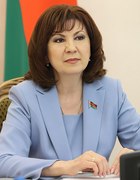
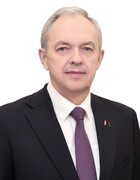
Delegation of the National Assembly of the Republic of Belarus to the CSTO PA consists of 7 deputies from the House of Representatives of the National Assembly of the Republic of Belarus and 4 deputies from the Council of the Republic of the National Assembly of the Republic of Belarus.
Plenipotentiary representative of the National Assembly of the Republic of Belarus: Viktor Kogut
Website of the House of Representatives of the National Assembly of the Republic of Belarus: http://house.gov.by/en/
Website of the Council of the Republic of the National Assembly of the Republic of Belarus: http://www.sovrep.gov.by/ru/
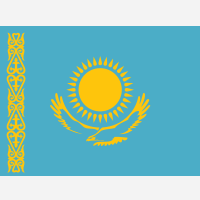
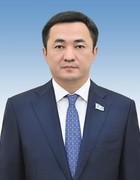
The delegation of the Kurultai of the Republic of Kazakhstan to the CSTO PA is represented by 6 deputies.
The head of the delegation is Aybek Dadebai, Chairman of the Kurultai of the Republic of Kazakhstan.
Deputation:
ADAMBEK Kendebai
KUSPEKOV Olzhas
RAKHIMZHANOV Askhat
KEMALOV Meirambai
KOZHAEV Marat
KUCHINSKAYA Yulia
Plenipotentiary Representative of the Parliament of the Republic of Kazakhstan, deputy Executive Secretary of the CSTO Parliamentary Assembly: Viktor Rogalev
Website of the Kurultai of the Republic of Kazakhstan: https://quryltai.kz/
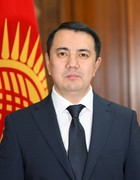
Delegation of the Supreme Council of the Kyrgyz Republic to the CSTO PA consists of 6 deputies.
AKIMBAYEVA Gulnara
ALIMZHANOVA Nilufar
JALILOV Azamzhan
KOZUYEV Alisher
UZAKBAEV Ulukbek
Plenipotentiary Representative of the Supreme Council of the Kyrgyz Republic: Nurbek Satvaldiev
Website of the Supreme Council of the Kyrgyz Republic: http://www.kenesh.kg/
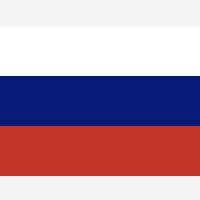
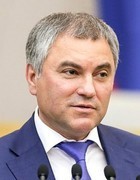
Delegation of the Federal Assembly of the Russian Federation to the CSTO PA is represented by 10 deputies of the State Duma of the Russian Federation and 12 senators of the Russian Federation.
Plenipotentiary representative of the Federal Assembly of the Russian Federation - deputy Executive Secretary of the CSTO Parliamentary Assembly: Mikhail Krotov
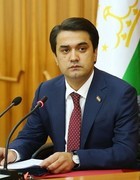
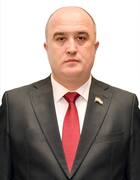
Delegation of the Supreme Assembly of the Republic of Tajikistan to the CSTO PA consists of 6 deputies of the National Assembly of the Supreme Assembly of the Republic of Tajikistan and 6 deputies of the Assembly of Representatives of the Supreme Assembly of the Republic of Tajikistan.
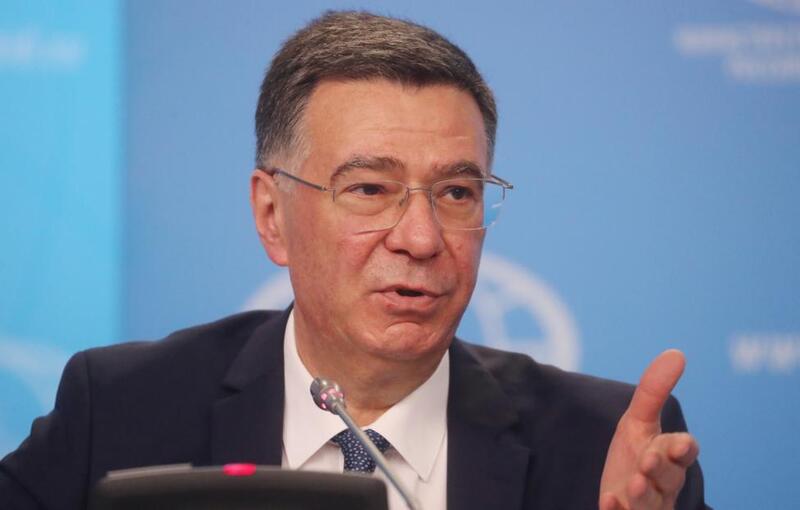
Aleksandr Pankin: CSTO Parliamentary Assembly Has Been a Powerful Legal Shield in the Region for Two Decades
10 February 2026
Aleksandr Pankin: CSTO Parliamentary Assembly Has Been a Powerful Legal Shield in the Region for Two Decades
Interview with Aleksandr Pankin, Russian deputy Foreign Minister
"Mr. Pankin, quite a lot has been achieved over the 20 years of the Parliamentary Assembly of the Collective Security Treaty Organization. In particular, more than 100 model acts have been developed and adopted. Could you name three or four initiatives of the CSTO PA that, in your opinion, are especially significant?"
For 20 years, the CSTO Parliamentary Assembly has been a powerful legal shield in the region, adopting model acts, recommendations and other documents aimed at harmonizing the national legislation of Member States on collective security. These acts are not legally binding, but serve as a guideline for parliaments. Many of those acts have been implemented in national legislation, strengthening coordination within the Organization.
I would like to underline the importance of the model law "On Countering Terrorism." Under the circumstances of growing extremism and cross-border challenges, it has become a real foundation for the harmonization of legislation, enabling the rapid exchange of data through competent authorities and strengthening the collective combat potential against terrorist threats.
The model law "On Energy Security" also plays an important role. The provisions of this law have formed the basis for national strategies in several countries, contributing to regional stability and preventing energy blackmail.
The model law "On Ensuring National Security" is a comprehensive act contributing not only to the harmonization of legal acts in this field, but also to the integration of the national security systems of the CSTO Member States and the coordination of approaches to training relevant personnel. The law served as basis for a large number of the Assembly's subsequent acts.
We see the evolution of the CSTO PA from reactive measures to proactive strategy. I'm convinced that this forward-looking approach will develop in the following years.
"2026 is the year of the Russian Federation's chairmanship of the Collective Security Treaty Organization. Which of Russian Federation's priorities for the chairmanship named by the President of Russia do you consider most promising for aligning positions of the CSTO countries?"
The priorities of Russia's CSTO chairmanship, which began on January 1, 2026, were defined by Russian President Vladimir Putin and presented at the session of the Organization's Collective Security Council in Bishkek on November 27 last year.
Given the geopolitical tensions, we are aiming to further consolidate the CSTO Member States, strengthening allied ties and deepening cooperation on key international issues. We will continue to expand the CSTO's communication with the Eurasian space states and their integration associations.
Our efforts will be focused on effectively fulfilling the Organization's main mission – maintaining peace and stability in its area of responsibility and ensuring favorable conditions for the secure development and prosperity of CSTO Member States.
We attach great importance to developing the Organization's military component. We will place the emphasis on building up the combat potential of the CSTO Collective Forces and equipping them with modern and compatible weapons and equipment. The work will be structured according to the nature of current and future challenges, taking into account the experience of modern armed conflicts. We will pay particular attention to cooperation on biological and information security.
Developing the defence industry enterprises of the CSTO countries and deepening cooperation between them, as well as maximizing the innovative potential, also remain our guiding principles.
We intend to expand the apparatus for joint action to combat international terrorism and extremism, legalization of criminal proceeds and the financing of terrorism, illicit trafficking in drugs and weapons, organized transnational crime and illegal migration.
Highly valuing the role of interparliamentary cooperation, we celebrate the 20th anniversary of the formation of the CSTO Parliamentary Assembly, which is doing important systematic work to create a single legal space throughout the CSTO territory.
"The threats faced by the Collective Security Treaty Organization and its members are growing in quantity and variety. In your opinion, what current threats require immediate legal regulation?"
An important area of work is combating cross-border crime in the digital age. In this context, there is a need to harmonize regulations on combating cybercrime and money laundering through online channels, as well as to coordinate the actions of law enforcement agencies in member countries.
Regulating artificial intelligence is no less of a priority, requiring the development of common principles for the responsible implementation of AI, protection of personal data, prevention of abuse and ensuring the transparency of algorithms in critical systems.
"What would you like to wish your CSTO PA colleagues on Diplomatic Worker's Day?"
I would like to express gratitude to my colleagues for their high professionalism and commitment to the common cause. I'm convinced that the constructive efforts within the CSTO PA, based on the experience gained, will reach a new level of quality in order to protect the interests of the CSTO Member States and ensure collective security, peaceful and stable development of our countries.
An important step was the start of work on granting legal capacity to the CSTO Parliamentary Assembly, which, ultimately, is intended to further strengthen the authority of the structure and promote its cooperation with other inter-parliamentary associations. For our part, we will continue to fully support the strengthening of parliamentary cooperation within the CSTO, as well as contribute to the development of the Assembly's external relations.
 RU
RU