Delegation of the National Assembly of the Republic of Belarus to the CSTO PA consists of 7 deputies from the House of Representatives of the National Assembly of the Republic of Belarus and 4 deputies from the Council of the Republic of the National Assembly of the Republic of Belarus.
Plenipotentiary representative of the National Assembly of the Republic of Belarus: Viktor Kogut
Website of the House of Representatives of the National Assembly of the Republic of Belarus: http://house.gov.by/en/
Website of the Council of the Republic of the National Assembly of the Republic of Belarus: http://www.sovrep.gov.by/ru/
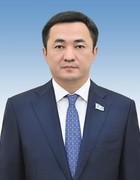
The delegation of the Kurultai of the Republic of Kazakhstan to the CSTO PA is represented by 6 deputies.
The head of the delegation is Aybek Dadebai, Chairman of the Kurultai of the Republic of Kazakhstan.
Deputation:
ADAMBEK Kendebai
KUSPEKOV Olzhas
RAKHIMZHANOV Askhat
KEMALOV Meirambai
KOZHAEV Marat
KUCHINSKAYA Yulia
Plenipotentiary Representative of the Parliament of the Republic of Kazakhstan, deputy Executive Secretary of the CSTO Parliamentary Assembly: Viktor Rogalev
Website of the Kurultai of the Republic of Kazakhstan: https://quryltai.kz/
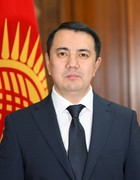
Delegation of the Supreme Council of the Kyrgyz Republic to the CSTO PA consists of 6 deputies.
AKIMBAYEVA Gulnara
ALIMZHANOVA Nilufar
JALILOV Azamzhan
KOZUYEV Alisher
UZAKBAEV Ulukbek
Plenipotentiary Representative of the Supreme Council of the Kyrgyz Republic: Nurbek Satvaldiev
Website of the Supreme Council of the Kyrgyz Republic: http://www.kenesh.kg/
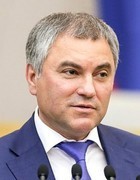
Delegation of the Federal Assembly of the Russian Federation to the CSTO PA is represented by 10 deputies of the State Duma of the Russian Federation and 12 senators of the Russian Federation.
Plenipotentiary representative of the Federal Assembly of the Russian Federation - deputy Executive Secretary of the CSTO Parliamentary Assembly: Mikhail Krotov
Delegation of the Supreme Assembly of the Republic of Tajikistan to the CSTO PA consists of 6 deputies of the National Assembly of the Supreme Assembly of the Republic of Tajikistan and 6 deputies of the Assembly of Representatives of the Supreme Assembly of the Republic of Tajikistan.
NATALIA KOCHANOVA: WE NEED TO BUILD A COMMON "DEFENCE PERIMETER" WITHOUT COMPROMISING SOVEREIGNTY
8 April 2026
NATALIA KOCHANOVA: WE NEED TO BUILD A COMMON "DEFENCE PERIMETER" WITHOUT COMPROMISING SOVEREIGNTY
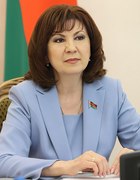
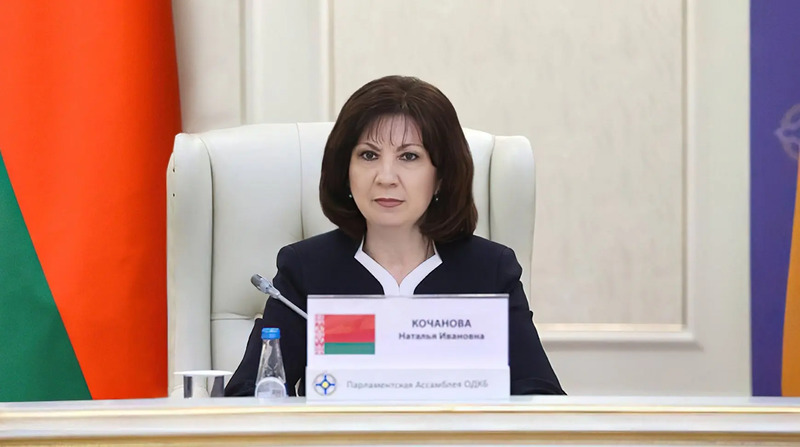
Interview with Natalia Kochanova, Chairwoman of the Council of the Republic of the National Assembly of the Republic of Belarus,
on the occasion of the 20th anniversary of the CSTO Parliamentary Assembly
Ms. Kochanova, over the past two decades, the CSTO Parliamentary Assembly has come a long way. Which of the Organization's achievements do you consider the most important?
Over the past two decades, the CSTO Parliamentary Assembly has established itself not merely as a platform for interparliamentary dialogue, but as a key institution in charge of the legislative dimension of collective security. It is a fully operational working body that shapes the legal framework of our common defence system. In my view, the main achievement is the establishment of a structured mechanism for harmonizing national legislation. Over the years, we adopted dozens of model laws and recommendations, which have become the foundation for updating domestic regulations in our countries. This has allowed us to speak the same legal language when it comes to defence and security.
If I were to name the most crucial, tangible achievement, I would pick the creation of a solid legal foundation for the operation of the Collective Rapid Reaction Forces (CRRF). It is important to note that the rapid deployment and use of contingents on the territory of Member States is an extremely complex process. At the beginning, the legal framework for joint exercises and the rapid deployment of forces was fragmented. Naturally, we faced some legal obstacles: from issues of jurisdiction and equipment customs clearance to the crossing of state borders.
Through the parliamentarians' hard work, which often goes unnoticed by the general public, we have managed to fully align our approaches. We resolved issues regarding the status of servicemen, social and legal protection for personnel, conditions for use of force and logistics. In addition to the strictly military component, the Organization has developed a comprehensive legal package aimed at combating terrorism, extremism, drug trafficking and illegal migration.
Today, with our countries regularly conducting Vzaimodeistvie military exercises or having to respond to real-life crises, contingent members follow completely transparent, coordinated and harmonized legal standards. These are not theoretical concepts, but a real contribution to the defence capabilities of our states, thoroughly tested not only by headquarters but also by real experience. The CSTO’s legal foundation has proven its strength.
Could you identify specific areas of the CSTO legal framework that require improvement in the future?
Absolutely. The world is rapidly changing, and the legal framework must not merely keep pace with the challenges — it must anticipate them. Today we're facing entirely new, hybrid threats. Therefore, our goal is to take a comprehensive approach in covering the organization’s main working areas and develop measures for legal counteraction not only against current but also the foreseeable threats to national and collective security in the CSTO area of responsibility.
In particular, we face an urgent, and, I would say, vital need to improve the legal framework for countering the use of information and communication technologies for military and political purposes. The front line now runs not only on land or in the air — it has moved to the digital environment and into people’s minds.
We are no longer talking about cybersecurity in the narrow, technical sense of the word — the protection of critical infrastructure, communication networks or databases. The main priority now is resolute counteraction to targeted, destructive information campaigns. We see how manipulation technologies are being used from outside to destabilize the socio-political situation in our countries, undermine the state system and destroy our traditional values.
The problem is that information attacks know no physical borders, and malicious actors actively exploit the differences in our legislation. And today, to apply effective, coordinated, collective information countermeasures, we need to harmonize legislation in this area. We must interpret threats in the same way so that we can jointly and promptly counter them.
The main goal of the Parliamentary Assembly for the nearest future is to develop unified model approaches, so that we can build a single, reliable "defence perimeter," without compromising national sovereignty or domestic legal traditions of each country, which is crucially important.
We simply cannot allow information saboteurs, foreign psychological operations centres or extremist groups to exploit even the slightest legal loophole to destabilize the situation in the CSTO’s area of responsibility and go unpunished. Our information space must be fully protected by the law.
What principles do you consider the most important for parliamentary cooperation with international organizations?
Engaging in dialogue with international organizations, we always follow the established principles of pragmatism, mutual respect and absolute equality. We firmly believe that international cooperation should be focused on constructive efforts and the resolution of real, pressing challenges in the realm of global and regional security. International forums must not become a platform for empty political declarations, application of double standards or imposition of the others' will on sovereign states.
I would like to draw attention to the principle of subsidiarity, in the very best, constructive sense of the term. We are absolutely open to constructive dialogue and ready to continue substantive cooperation with organizations such as the UN, CIS and the SCO, especially in areas where their unique experience and mandate truly complement our own efforts, creating a synergistic effect. The examples of common ground areas include coordinating efforts in humanitarian demining, curbing channels of illegal migration, and jointly combating transnational organized crime and illicit drug trafficking.
However, we clearly state our priorities: any such dialogue must be strictly based on respect for the central, defining role of CSTO Member States in ensuring security in our shared Eurasian space. We ourselves carry responsibility for peace and stability in our area of responsibility.
We will firmly hold our ground on this matter. No external structure, military and political bloc or international coalition has the right to impose their own terms upon us or attempt to replace those effective, sovereign collective decision-making mechanisms that have been developed, legally established and time-tested within our Organization.
Could you share the experience of the Council of the Republic of the National Assembly of the Republic of Belarus in monitoring the implementation of decisions adopted within the CSTO PA framework. Are there any procedural aspects that you would like to improve?
The Council of the Republic of the National Assembly of the Republic of Belarus has always paid the utmost attention to matters of systematic parliamentary oversight. Since the Council of the Republic is a house of territorial representation, representing the interests of all regions of the country and possessing the constitutional right to approve laws, we have established a comprehensive system. It allows us to closely monitor the implementation of every decision adopted by the CSTO PA, at literally every stage of its incorporation into national legislation.
Speaking of specific practices, as part of our preparations for CSTO PA Council meetings, we actively hold extended sessions of our standing commissions. We make it a point to involve leading experts, analysts and heads of key law enforcement agencies and ministries in this work.
We also assess how the provisions of model legislation were taken into account in drafting of various security bills, particularly within the framework of the Expert Council operating under the Council of the Republic.
This deep, cross-agency approach helps us to avoid formalism. Our goal is not to merely tick a box and declare that yet another model law or document has been duly acknowledged. It is critically important for us to understand exactly how a particular recommendation of the Assembly is translated into departmental orders, instructions and procedures. Ultimately, behind every letter of the law there must be a functioning mechanism to protect our citizens, protect the constitutional order and absolutely ensure the national security of the Republic of Belarus within the framework of our alliance commitments.
As for the prospects and procedural aspects that require improvement, we see enormous potential in developing and institutionally embedding the "parliamentary inquiry" system directly within the CSTO. Given the rapid pace of contemporary military and political processes, we need the fastest possible response.
We hope to establish a clearly defined, regulated mechanism for the national parliamentary delegations of Member States to promptly obtain objective information from executive bodies — the CSTO Secretariat and the Joint Staff — regarding the progress of various joint programs. Parliamentarians must have a clear understanding of the status of their implementation. The introduction of such a tool would significantly increase the effectiveness of our monitoring, take the cooperation between the branches of government within the CSTO to a new level, and make our work even more substantive and goal-oriented.
What plans related to the CSTO PA's work does the Council of the Republic of the National Assembly of the Republic of Belarus have for 2026?
Our plans for 2026 are closely aligned with the general strategic direction of the Organization as well as the national priorities of the Republic of Belarus. We look into the future with a clear understanding of our goals and have identified several key areas of our work.
Firstly, they involve systematic legal support for measures aimed at strengthening the Organization’s military component, improving crisis response mechanisms and countering modern challenges, including biological and cyber threats.
Secondly, we will continue our targeted efforts to implement the new five-year CSTO PA Action Plan for Harmonization of National Legislation, which covers a wide range of areas — from countering terrorism and extremism to improving the system for managing artificial intelligence in the field of information security, and building national cybersecurity systems. Drawing on its own experience in lawmaking, the Council of the Republic intends to contribute to the development of model laws that will serve as a basis for the harmonization of national legislations. In this regard, the work within the specialized commissions of the Assembly takes on particular significance — the Belarusian parliamentarians consistently advocate approaches that have been tested in our country and have proven their effectiveness.
Thirdly, we attach particular importance to the all-round activization of the CSTO’s youth parliamentary dimension. Our common goal is to prepare a new, strong generation of leaders and legislators. We need young leaders who will understand the paramount importance of collective security, sovereignty and allied commitment established through open, trust-based communication. This is the main guarantee that the values of stability and peace in our common space will be firmly protected in the future.
Fourthly, along with the further strengthening of the defence capabilities of CSTO PA Member States and the coordination of joint actions, we will continue to advocate for a more just multipolar world based on unconditional respect for international law, as well as for the de-escalation of tensions in interstate relations and development of a mutually respectful, equal dialogue.
Fifthly, we are aiming at more actively engaging the Assembly’s expert potential in shaping a sustainable model of Eurasian security as an important step toward rebuilding the architecture of international security.
Interparliamentary cooperation between the Republic of Belarus and other CSTO Member States is evidently highly productive. In your view, what are the reasons behind this success?
The roots of this success lie in the very organic nature of our cooperation. Unlike some other international structures, our partnership has never been situational, artificial, or dictated by short-term political circumstances. It is originally based on the solid foundation of our shared historical memory, the inseparable economic ties between our peoples, and — which is particularly important today — our fully aligned strategic assessments of contemporary global threats.
When Belarusian parliamentarians sit down at the negotiating table with our esteemed colleagues from Kazakhstan, Kyrgyzstan, Russia or Tajikistan, we speak a single language that we all understand. We do not need to waste precious time and years of diplomatic effort trying to prove to one another that the problems of international terrorism, transnational drug trafficking, bio-threats or interference in the internal affairs of sovereign states are real. We have aligned our fundamental positions long ago.
The remarkable productivity of our cooperation naturally stems from the highest level of trust. This trust hasn't been formed overnight; it has been built and forged over decades of joint extensive work, as well as established through strong personal ties between parliamentarians. This format allows us to resolve even the most pressing and complex issues not through the dry, protocol-driven mode of formal diplomacy, but through a sincere, amicable search for optimal solutions. We deeply understand and respect each other’s national interests.
This genuine allied "sense of solidarity," combined with a shared legal culture and dedication to the interests of our citizens indeed produces a very powerful synergistic effect that we proudly witness today at the CSTO Parliamentary Assembly.
 RU
RU