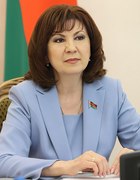
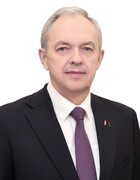
Delegation of the National Assembly of the Republic of Belarus to the CSTO PA consists of 7 deputies from the House of Representatives of the National Assembly of the Republic of Belarus and 4 deputies from the Council of the Republic of the National Assembly of the Republic of Belarus.
Plenipotentiary representative of the National Assembly of the Republic of Belarus: Viktor Kogut
Website of the House of Representatives of the National Assembly of the Republic of Belarus: http://house.gov.by/en/
Website of the Council of the Republic of the National Assembly of the Republic of Belarus: http://www.sovrep.gov.by/ru/
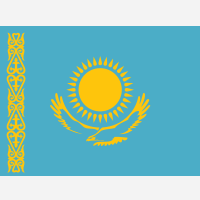
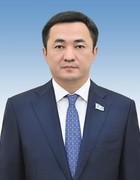
The delegation of the Kurultai of the Republic of Kazakhstan to the CSTO PA is represented by 6 deputies.
The head of the delegation is Aybek Dadebai, Chairman of the Kurultai of the Republic of Kazakhstan.
Deputation:
ADAMBEK Kendebai
KUSPEKOV Olzhas
RAKHIMZHANOV Askhat
KEMALOV Meirambai
KOZHAEV Marat
KUCHINSKAYA Yulia
Plenipotentiary Representative of the Parliament of the Republic of Kazakhstan, deputy Executive Secretary of the CSTO Parliamentary Assembly: Viktor Rogalev
Website of the Kurultai of the Republic of Kazakhstan: https://quryltai.kz/
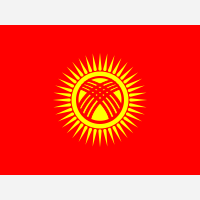
Delegation of the Supreme Council of the Kyrgyz Republic to the CSTO PA consists of 6 deputies.
AKIMBAYEVA Gulnara
ALIMZHANOVA Nilufar
JALILOV Azamzhan
KOZUYEV Alisher
UZAKBAEV Ulukbek
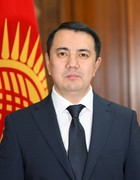
Plenipotentiary Representative of the Supreme Council of the Kyrgyz Republic: Nurbek Satvaldiev
Website of the Supreme Council of the Kyrgyz Republic: http://www.kenesh.kg/
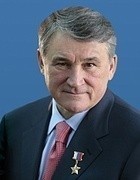
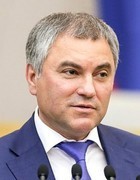
Delegation of the Federal Assembly of the Russian Federation to the CSTO PA is represented by 10 deputies of the State Duma of the Russian Federation and 12 senators of the Russian Federation.
Plenipotentiary representative of the Federal Assembly of the Russian Federation - deputy Executive Secretary of the CSTO Parliamentary Assembly: Mikhail Krotov
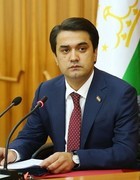
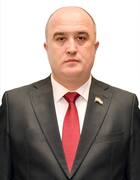
Delegation of the Supreme Assembly of the Republic of Tajikistan to the CSTO PA consists of 6 deputies of the National Assembly of the Supreme Assembly of the Republic of Tajikistan and 6 deputies of the Assembly of Representatives of the Supreme Assembly of the Republic of Tajikistan.
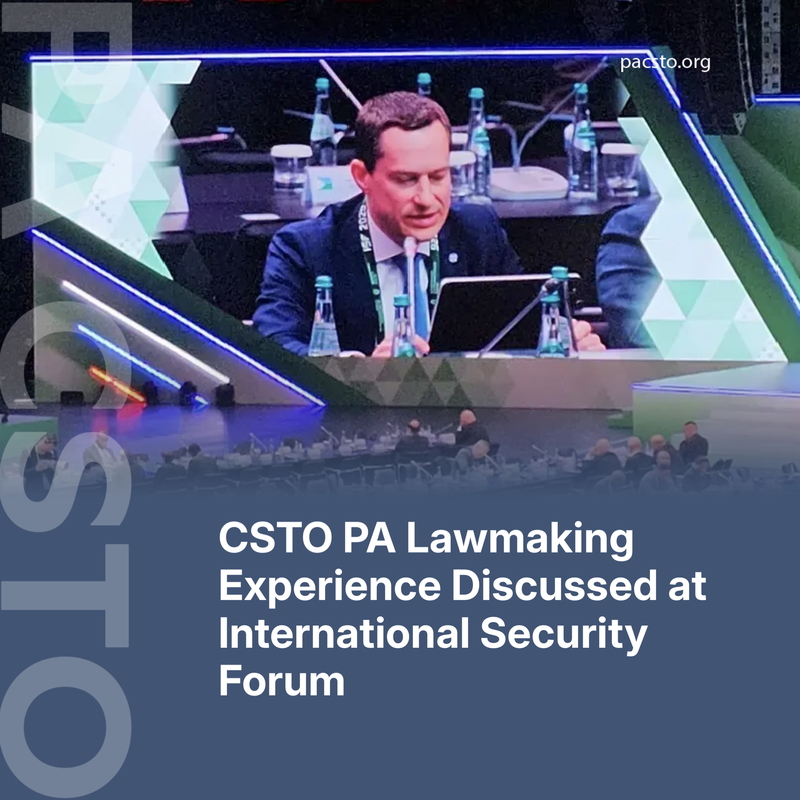
CSTO PA Lawmaking Experience Discussed at International Security Forum
28 May 2026
CSTO PA Lawmaking Experience Discussed at International Security Forum
The 14th International Meeting of High Representatives for Security Issues took place in the Moscow region as part of the International Security Forum.
Sergei Pospelov, Executive Secretary of the CSTO PA, delivered a report titled "Model Lawmaking of the CSTO Parliamentary Assembly and Collective Security in Greater Eurasia."
In his speech, he underlined that for over 30 years, the CSTO has steadily protected internationally recognized borders from armed aggression, ensuring safe development and long-term peace across the Organization’s external borders.
Sergei Pospelov paid special attention to the legal work of the CSTO Parliamentary Assembly. He noted that currently the Assembly’s list of model laws and recommendations comprises 104 documents, and the long-term action plan includes developing 45 new ones.
The speaker highlighted several key areas as examples of the Assembly’s successful work. In the field of peacekeeping, the model law "On Peacekeeping Activities and Peacekeeping Forces" was adopted in 2021, aimed at modernizing national legislation.
In the field of counterterrorism, more than 15 documents are being implemented, including the model law "On Countering Terrorism," adopted last year.
The Assembly also focuses on electoral sovereignty, ensuring cognitive security and protecting electoral processes from foreign interference, based on the 2022 recommendations.
Sergei Pospelov emphasized that one of the fundamental principles guiding the CSTO Parliamentary Assembly’s work is to stay ahead of the curve. The Assembly is actively responding to new challenges by drafting documents on biological safety (2023) and the regulation of artificial intelligence and robotics (2024).
The new 2030 lawmaking program entails the creation of a model Weapons Code, as well as laws on combating cyber fraud and countering extremism through information operations.
To strengthen interparliamentary cooperation, the Executive Secretary of the CSTO Parliamentary Assembly proposed that the Assembly’s international legal framework be taken into account when drafting the Eurasian Charter on Diversity and Multipolarity. He also called for utilizing the results of parliamentary monitoring and threat anticipation in shaping the Eurasian security architecture and drawing on the Assembly’s long-standing analytical experience within the multilateral efforts on international security.
In his closing remarks, Sergei Pospelov noted that this November, the CSTO Parliamentary Assembly will celebrate its 20th anniversary, continuing to serve as an effective lawmaking body and guarantor of regional security.
 RU
RU